

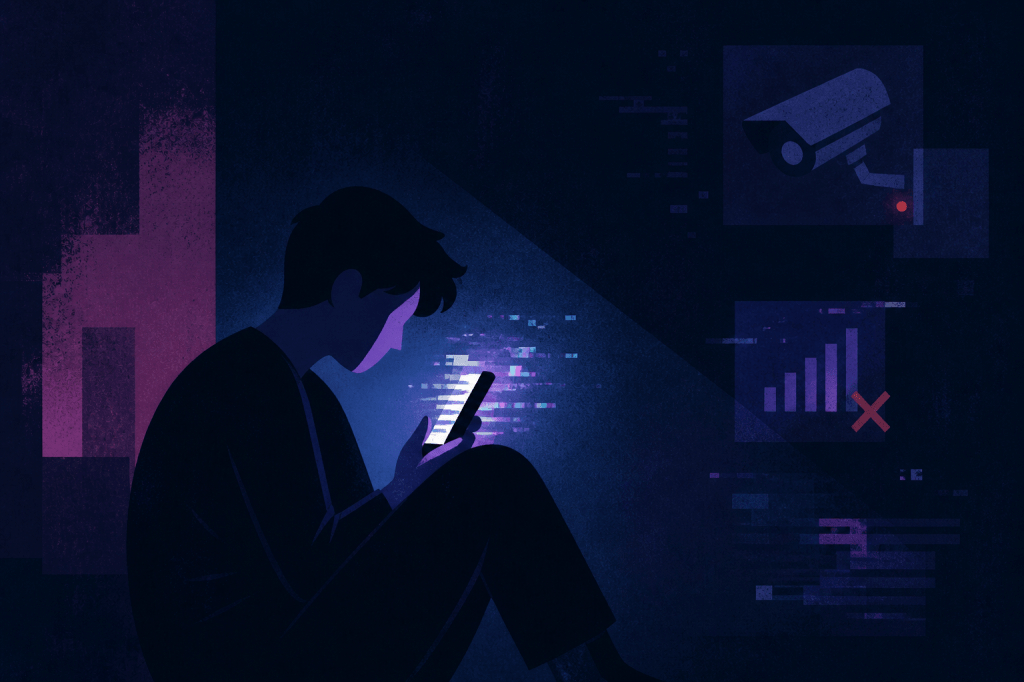
HOMA (Alliance for Iranian LGBTQI+ Justice) has released a new situation brief examining the impact of internet shutdowns, state surveillance, and economic instability on LGBTQI+ individuals in Iran. The report also informs HOMA’s ongoing advocacy efforts at the international level, aimed at advancing digital rights as fundamental human rights.
The report highlights that for many LGBTQI+ people, access to a free and secure internet is not a luxury, but a lifeline, essential for safety, identity, and connection.
These findings are not isolated. A recent statement by the Iranian Sociological Association (ISA) reinforces this analysis, warning that current digital policies are deepening a “digital divide” and producing “structured distrust” between the state and society.
The ISA further highlights that proposals such as “tiered” or “Pro Internet” risk creating structural inequality by introducing graded access to information, fueling long-term social frustration and undermining cohesion.
Together, these dynamics are creating a situation of compounded vulnerability, where digital repression, economic pressure, and security risks reinforce one another, disproportionately affecting already marginalized communities.
Ensuring access to a free, secure, and open internet is therefore not only a matter of policy, but of fundamental human rights.
Read the full report:
 Homa
Homa 